Welcome to 2026: The Year Output Became Cheap

And why that might be the best thing that ever happened to you
Last week, I spent four hours building a feature that would have taken me two days eighteen months ago. Not because I'm faster. Because Claude Code with Opus 4.5 is absolutely epic. I watched it plan, ask me clarifying questions, build a precise execution strategy, and then just do the work.
My first reaction was existential dread. Sound familiar?
But here's what I've been thinking about as we step into 2026: We've been here before. Humanity, I mean. We've stood at this exact precipice—where suddenly, what used to be expensive and slow becomes cheap and fast.
And every single time, we got the lesson wrong. At first.
"From Today, Painting is Dead"
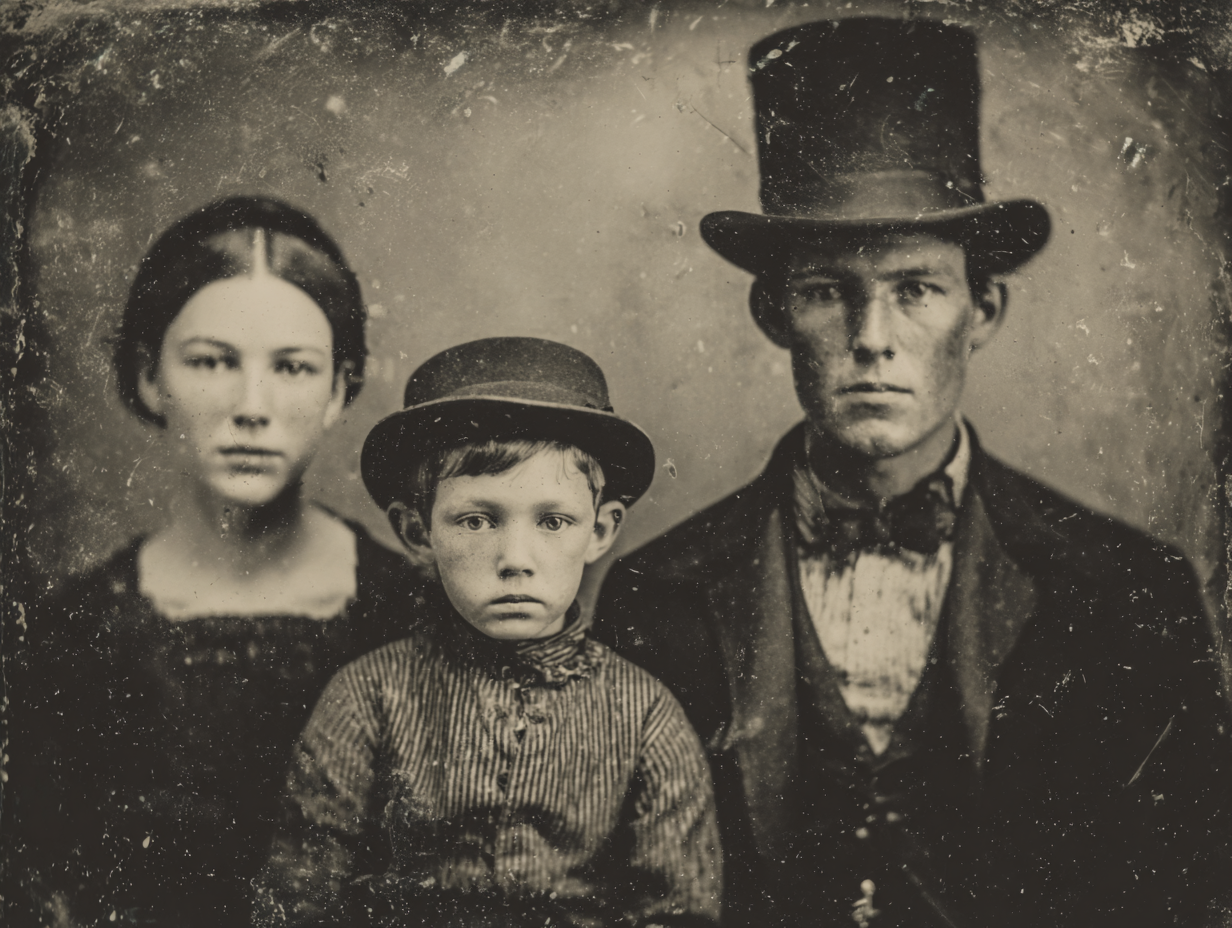
In 1839, the French painter Paul Delaroche saw his first daguerreotype and reportedly declared: "From today, painting is dead!"
He was terrified. Here was a machine that could capture a likeness in minutes—a process that took skilled portrait painters weeks. The output of realistic images had just become, essentially, free.
Know what happened next?
Painting didn't die. It exploded.
Freed from the tyranny of accurate representation, painters discovered Impressionism, Post-Impressionism, Cubism, Surrealism. When output became cheap, meaning became valuable. The camera captured what you looked like. The painter captured who you were.
Portrait painters didn't disappear, many of them picked up cameras as a side gig. Some used photos as studies for their paintings. The smart ones realized their job had evolved from "create accurate likenesses" to "create work that no machine could replicate."
The Scribe Who Wouldn't Let Go
Back further. 1450s. Gutenberg.
Before the printing press, a scribe could produce maybe forty pages per day through painstaking hand-copying. A single Bible took years. Knowledge was scarce, expensive, and controlled by a tiny elite.
Gutenberg's press? Up to 3,600 pages per workday. One hundred eighty times faster.
Within fifty years, Europe went from a few tens of thousands of books to over twenty million. The price collapsed. Information wasn't a trickle anymore—it was a flood.
In 1476, a group of Parisian scribes actually attacked and destroyed a printing press. They feared, correctly, that their livelihood was threatened.
But here's the thing nobody talks about: the position of handwritten books didn't just vanish. It got repackaged as an exquisite luxury. When printed books became common, handcrafted ones became rare. Some scribes even copied printed books to meet demand for the handmade version.
The industry didn't die. The value proposition shifted.
The Real Question
When output becomes cheap, what becomes valuable?
For scribes, it wasn't the copying—it was the craft, the uniqueness, the human touch.
For painters, it wasn't the accuracy—it was the interpretation, the meaning, the vision.
For CTOs in 2026... it's not going to be the code.
The Output Conundrum
The SDLC is fundamentally changing. Gartner says AI will influence 70% of app design and development processes this year. Stack Overflow's 2025 survey shows 65% of developers using AI tools weekly. Anthropic's CEO predicted 90% of code would be AI-generated within months.
Claude Opus 4.5 just scored higher on Anthropic's internal engineering test than any human candidate ever has. Let that sink in.
We can OUTPUT more than ever. But is it really cheaper?
Here's where history gets interesting.
During the first Industrial Revolution, output per worker expanded by 46% between 1770 and 1840. But real wages? Stagnant or falling for people in the lower income distribution. The gains didn't flow to ordinary people for generations.
Photography made portraits "cheaper"—but Parisian studios were producing 100,000 per year by the early 1850s. The middle class who couldn't afford painted portraits suddenly could have photographs. The industry didn't shrink; it exploded while transforming.
The question isn't whether output will be cheaper. It will be.
The question is: what new thing becomes expensive?
The Case for CTOs to Code More in 2026
This is the year CTOs should code more, not less.
Not because we need to compete with AI on output. We'll lose that race. But because the nature of what's valuable in software leadership is shifting and we need to feel it in our fingers to understand it.
When I use Claude Code, something strange happens. The grunt work evaporates. The rote tasks that used to eat my days? Gone. What remains is pure decision-making. Architecture choices. Trade-off analysis. The why behind the what.
That's where you live now.
One developer I read about recently stopped using AI tools for a side project after using them heavily at work. He found himself "feeling so stupid because things that used to be instinct became manual."
That's the danger. Not that AI takes our jobs—but that it atrophies the judgment we built through the doing.
Get your hands dirty in 2026. Use the tools. They're remarkable. Opus 4.5 handles ambiguity and reasons about tradeoffs without hand-holding in ways that genuinely surprise me. But stay in the code. Build the muscle memory of judgment even as the output becomes commoditized.
Embracing the Uncertainty
I'm not going to pretend I know how this plays out.
I've spent twenty years helping CTOs navigate transitions. I've watched brilliant technical minds struggle with the shift from builder to leader. And now we're all facing something different: the shift from human-as-producer to human-as-orchestrator.
It's uncomfortable. It should be.
Every time output got cheaper in history, the transition was messy. The Luddites weren't stupid. They were scared, and they had reason to be. Some of them did lose their livelihoods. Some scribes ended up impoverished. Some portrait painters never adapted.
But also: literacy went from 30% to 62% in England over 150 years after Gutenberg. Photography democratized portraiture to the masses. The Industrial Revolution eventually raised living standards dramatically.
The chaos was real. The transformation was also real.
What I'm Betting On
Here's what I believe: The scribes who thrived weren't the fastest copiers. They were the ones who understood that craftsmanship, uniqueness, and human judgment would always have a market. Just a different one.
The painters who thrived weren't the most photorealistic. They were the ones who said, "Great, the camera can capture what you look like. Let me show you what you feel like."
The CTOs who thrive in 2026 won't be the ones who output the most code. They'll be the ones who understand that when code becomes cheap, judgment becomes expensive. Architecture becomes expensive. Knowing what to build and why becomes expensive.
Leadership (the human kind, the messy kind, the kind where you have to navigate politics and personalities and pressure) that's about to become more valuable, not less.
Welcome to 2026
So here we are.
The tools are astonishing. Claude Code with Opus 4.5 genuinely shifts what's possible. The SDLC is transforming in real-time. Everything you thought you knew about developer productivity is being rewritten.
And you're probably scared. Or excited. Or both. (I'm both.)
That's the right response. The scribes who weren't scared weren't paying attention. The painters who weren't excited missed the opportunity.
This year, get your hands in the code. Use the tools. Feel the shift happening. And ask yourself the question that actually matters:
When output becomes cheap, what do I have that no machine can replicate?
That's your north star for 2026.
Let's build.
Et
📩 etienne@7ctos.com
P.S. - If you're a CTO wrestling with this transition—from technical contributor to human leader, from producer to orchestrator—that's exactly what we built 7CTOs to help with. Because this transformation? It's not something you can do in isolation.